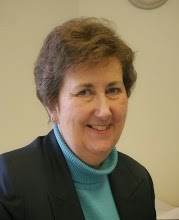
Don Westfahl looked across a barren field on the airport in Shafter. From a layer of fog poked weather-beaten buildings, the leftovers of World War II. They stirred memories of a time that changed Westfahl’s life.
A 19-year-old farm boy from Perry, Okla., Westfahl was sent with thousands of other young men by the Army Air Corps to Minter Field, just east of Shafter, Calif., to learn how to fly fighter planes and bombers during World War II.
“It was enjoyable to be there as a cadet,” the 85-year-old Westfahl recalled during a recent interview. “We were treated well. The food was excellent. Honey, butter and a case of milk were always on the table. The mess sergeant would save the best steaks and he would put on a banquet at the end of training.
“They demanded discipline, but they were more interested in getting us to be pilots than in changing us. It was a good group of guys who had a lot of fun flying.”
Minter Field also was where Westfahl met his wife of 55 years, the former Lee Becker of Bakersfield, which is just south of Shafter. Westfahl and Becker met during a Junior Women’s League dance for cadets in 1944. Becker worked in a medical office on the base. The young cadet was just passing through.
Westfahl spent 10 weeks of his 40-week aviation training course at Minter Field, the Army Air Corps’ largest “basic training” base on the West Coast. After leaving Minter Field, he went on to advance training at bases in Texas, South Carolina, Georgia and Oklahoma.
But that dance in the “rec hall” sparked a romance kept alive through letters. “I still have letters I won’t let anyone see,” Westfahl confessed with a sly chuckle.
The couple married in June 1944 and Lee followed her husband from camp to camp until he was sent overseas a year later. From a base in India, Westfahl flew weather reconnaissance flights to support pilots navigating the dangerous “Hump,” a death-defying route over the Himalayas used to supply Chinese troops fighting the Japanese.
At the war’s end, Westfahl came “home” to Bakersfield, where his bride and a young son he had never seen were waiting for him. He was hired by a local refinery and worked his way up to assistant manager, before moving to Sunland Refinery, where he wound up a 40-year career as its manager.
The couple raised three children – Donald Jr., the oldest, who teaches English in Saudi Arabia; Patricia, a travel agent in Torrance; and Michael, who lives in Bakersfield and is retired from an oil equipment sales career. Westfahl’s bride died 10 years ago.
About six months after retiring from his refinery post, Westfahl said he “got nervous.” He went back to work as a part-time plumbing and electrical salesman at a Lumberjack home improvement store until it closed a few years ago.
In 1999, a man Westfahl knew from his refinery days came into the store. Talk bounced around various topics and somehow Westfahl mentioned he had been stationed at Minter Field during the war. The man he was talking to was a volunteer at the Minter Field Air Museum.
“I didn’t even know there was a museum,” Westfahl recalled. That was 10 years ago. Not only was Westfahl recruited as a volunteer, he became the “go-to guy” when people want to tour the old base, and learn about its war memorabilia, restored aircraft and various World War II-era military vehicles.
Westfahl is the museum’s only docent who actually served at the base. His first-hand knowledge is treasured by volunteers and visitors.
“Most of the board members can give a good tour, but only he can tell you where the buildings were on the field. He can point out the ready room,” said Dean Craun, a retired television marketing executive, who volunteers as the museum’s public relations contact.
“You never know who will pop through the doors,” said Craun, explaining museum visitors include local residents and those from far away.
“A few years ago, we were contacted by a guy who had been adopted. He wanted to learn more about his father and knew he had been based at Minter Field,” said Craun. Volunteers sorted through documents, including past issues of the base newspaper, the Echelon. They found a photo of the man’s father, had it enlarged and sent it to him. The man later visited Minter Field. “He was quite moved by the experience.”
“Not long ago, a couple of guys from England had been visiting military museums in the Bay Area and then driving to Arizona. They pulled off the highway to see the Minter Field Air Museum,” said Craun.
“It is important to preserve Minter Field,” said Craun, noting that more than 11,000 pilots were trained at the base during World War II.
It was named after Lt. Hugh C. Minter, a member of a locally prominent family and World War I pilot. Minter, the commander of the 73rd Pursuit Squadron at March Field in Southern California, died in a mid-air collision in 1932 over that base.
In historical documents, Minter Field is described as a “city within a city,” with about 7,000 personnel at any given time. The primary training aircraft at the base was the BT-13 Consolidated Vultee Valiant, affectionately known as the “Vultee Vibrator” because it shook during certain maneuvers.
“The museum honors the Greatest Generation – people who put it on the line for their country in the 40s,” said Craun. “The military is downplayed in schools. There isn’t much taught about World War II, Korea or Vietnam.”
Craun is putting together a video library commemorating the generation at the museum. So far, he has assembled more than 900 hours of World War II videos. A library of Minter Field and World War II records also is being archived in what was once the base’s original fire station.
The museum is a non-profit organization dependent on fundraising and donations. Major events conducted by the museum include a February founder’s day banquet, a spring Warbirds air show and an October military vehicle show.
The museum is open to the public and for touring on Fridays and Saturdays from 10 a.m. to 2 p.m. By special arrangement, tours at other times can be arranged. Call 654-9159 or e-mail mfam@minterfieldairmuseum.com.
The museum is located 12 miles north of Bakersfield at 401 Vultee St., Shafter, Calif.Exit Highway 99 at Lerdo Highway and drive west. Admission is free.
This article written by DIANNE HARDISTY first appeared in The Bakersfield Californian on Sunday, Jan. 17, 2010. You can see more articles written by Dianne Hardisty by going to www.svs2help.com
ABOUT MINTER FIELD
Dedicated Feb. 7, 1942
Named after Lt. Hugh C. Minter, a member of a locally prominent family and World War I pilot who died in a mid-air collision in 1932 over March Field
The largest Army Air Corps base during World War II on the West Coast for “basic” air cadet training
More than 11,000 combat pilots were trained at Minter Field
Minter Field Air Museum is located at 401 Vultee St., Shafter. Exit Highway 99 at Lerdo Highway and drive west. Admission is free.
Museum is open Fridays and Saturdays from 10 a.m. to 2 p.m. Tours at other times can be arranged by calling 654-9159 or e-mail mfam@minterfieldairmuseum.com.
Go to www.minterfieldairmuseum.com for more information.
Showing posts with label world war II. Show all posts
Saturday, January 16, 2010
Thursday, November 26, 2009
POW GROUP GETTING SMALLER
Once there were more than 30. Now there are only two. And when they are gone, likely the Cessna-Sergeant Chapter of the American Ex-Prisoners of War will cease to exist.
There is a faint hope that the Bakersfield organization of mostly World War II veterans will be "saved" by comrades stepping out of the shadow of obscurity and signing up for membership.
But the reality is that World War II veterans are dying off at a national rate of more than 1,000 a day, according to the federal Department of Veterans Affairs. It is unlikely that a veteran of that war -- a veteran who also happens to be a former prisoner of war -- is living in our midst, just waiting to join the Cessna-Sergeant Chapter.
American former prisoners of war from any conflict can join. But the majority of the U.S. captives came out of World War II, when more than 130,000 were taken prisoner on European and Pacific battlefields. In the Korean War, about 7,100 were reported captured and interned. After the Vietnam War, when 725 were reported captured, the number of American POWs dwindled to single digits in subsequent wars. The numbers are higher if "missing in action" are included.
Former World War II Army Air Corps gunner Edwin Joe and former Army infantryman James Wilson are the only remaining former POWs in the Bakersfield chapter.
Veterans' widows, sons and daughters also can be members. The Cessna-Sergeant Chapter is headed by Richard Ornelas, the son of Korean War POW Isaac Ornelas, who died five years ago. But to be recognized by the national organization (see www.AXPOW.org), the unit must have former POWs as members.
"We will keep going as long as they want to keep going," said Ornelas, explaining the chapter is like an extended family, helping and supporting veterans, their relatives and survivors.
Ornelas is convinced there are former POWs living in Kern County, but "they are taking care of their own situations on their own."
Seeking camaraderie, Joe joined the chapter in the mid-1970s, shortly after it was formed. Wilson joined in 2000, when his wife, Mary, spotted a meeting announcement in The Californian and thought the unit would be a good place for her husband to get help.
In the chapter, both men say they found the support and understanding that only can be given by comrades who have experienced the same horrors of war and imprisonment. Both say they miss their friends and brothers who have passed away.
Joe, 88, and Wilson, 87, know when they are gone, the book likely will be closed on the Cessna-Sergeant Chapter. It is a story that is being told nationwide. The Air Force Times recently reported that two to three chapters a month are closing. In addition to the loss of support, the closures mean the loss of a public reminder of the sacrifices POWs made for their country.
Born in China, Joe was brought to Bakersfield as a 2-year-old to be reunited with his father, who ran a combination pharmacy and gambling hall on 21st Street. The father and son lived in a basement under the business.
He graduated from Bakersfield High School in 1940, the same year Joe said police cracked down on gambling, prompting the pair to move to Mississippi, where his father re-established his gambling business. Joe soon moved to Houston, where he became a cook in a restaurant. After the Japanese attacked Pearl Harbor in 1941, Joe joined the Army Air Corps.
Joe wanted to be a pilot. Instead he was sent to a week of training and became a tail gunner on an A-20 bomber.
As part of a three-man crew, he flew 55 missions in an airplane named Built for Action.
On Sept. 29, 1944, the crew volunteered for a mission over Bitburg, Germany. Returning to their base in England, their plane was hit by anti-aircraft guns. The pilot crashed and died in the plane. Joe and the turret gunner parachuted to safety.
Joe said the pair became separated, with the turret gunner being attacked and killed by German townspeople when he landed. Joe managed to hide for seven days until he was discovered by German troops. He and other captives were hauled in coal cars to Stalag IV, near the border of Poland, where he was held for 10 months.
As the end of the war neared, the German guards marched the POWs for 83 days before they set them free. Soon Joe and his comrades found the allied lines, and they were on their way home to the U.S.
Joe received shrapnel wounds in his leg in an earlier air battle. When he was captured, his feet were frostbitten and he had to be carried. In recognition of his injuries, he was awarded two Purple Hearts.
Although Joe reluctantly gives details about his captivity, his daughter, Kathy, notes that he was forced to sleep in a dirt trench under a metal grate and was given potato water to drink. He lost 25 pounds from his already slight frame.
"All I wanted to do is eat," Joe recalled of his release.
Joe was discharged from the service in Houston. He met his wife, Gloria, on a trip to New Orleans. After the couple married, Joe and his bride moved to Bakersfield, where he opened a grocery store. For a short time, he also operated a Hawaiian restaurant with a partner. A stroke forced his retirement and the closure of Eddie's Market on East Brundage Lane.
Gloria and her twin sister, Lorraine, also joined the service during the war. Five of their six brothers were already in overseas service.
Edwin J. Joe (also known as Jeong Shew Wing) and Gloria Toy Gim Jee are included in the book "Duty & Honor: A Tribute to Chinese American World War II Veterans of Southern California."
Gloria died last year. Edwin uses a wheelchair. The walls of his northeast Bakersfield home are filled with pictures of their three adult children, and their many grandchildren and great grandchildren.
No doubt his family's presence accounts for the nearly constant smile on his face.
This article written by DIANNE HARDISTY appeared first in The Bakersfield Californian on Nov. 8, 2009.
WAR HORRORS STILL FRESH
James Wilson can't bring himself to talk about it. He can talk about growing up in New York and enlisting as an 18-year-old in the Army infantry. He can even talk about being discharged from the Army in 1945, getting married, moving to California, raising two children and working as an auto mechanic after the war.
But the Bakersfield man just won't, or can't, talk about his experiences fighting in North Africa, being taken prisoner by the Germans, being held in Italy, escaping, being alone and hiding for seven months as he searched for allied forces. In fact, just thinking about those years makes him grimace.
Wilson's wife, Mary, says he has been having flashbacks and nightmares about his war experiences. After years of sealing his memories tightly away, the pain of his war experiences is seeping to the surface.
Like most others who returned from the war, Wilson heard his nation's applause for a job well done. But he heard few offers of help.
In a document filed in support of his application for veterans benefits, Wilson reported that combat left him with ringing in his left ear from an explosion. He has constant pain from the damage done to his back and knees from German guards striking him with the butt of their rifles.
"When I received my discharge, I told the doc about my ear, my back and about my knees," Wilson wrote. "All he said was not to worry about that. I would be A-OK. [It] never happened."
During a recent interview, Wilson said he just sucked it up and moved on with his life. But now 87 years old, Wilson's health has further deteriorated. He relies on a walker for mobility.
He will talk about the affects of his physical injuries. His wife talks about the emotional damage.
Mary and James Wilson married in 1991. His first wife had died. His two grown children were living miles away. He was soon to retire from his job in the auto shop at Sears. An advertisement he placed for a pen pal attracted Mary's attention.
She was divorced. Her two children were grown. She was living in San Bernardino County and working as a medical transcriber in a hospital. The couple exchanged letters. Then they met. Wilson said it was "love at first sight."
"The good Lord sent her to me," he said, claiming they have never had an argument in their 18 years of marriage.
After moving to Bakersfield, Mary spotted a notice in The Californian that a local organization of former POWs was meeting. She urged her husband to attend, hoping he would find the support he needed to deal with his physical and emotional problems.
His fellow veterans encouraged him to file for VA benefits relating to his injuries. She said he also received emotional support from a group of men who understood what he had experienced in the war.
But unlike some of the veterans, Wilson said he could not talk about his experiences.
"I would leave the room when they started. I couldn't understand how they could talk about it like that," Wilson said. And he still can't.
Growing quiet when he was asked about it,Wilson would only respond that when his ship landed in North Africa, "I met the enemy. I'm not going to touch on the war. It's too hard.You will have to figure that out for yourself. I was in five major campaigns."
Wilson is not alone in not wanting to talk about his war experiences, but being haunted by them. Veterans Affairs psychologists report an increasing number of elderly veterans are being identified during clinic visits with symptoms of post-traumatic stress disorder.
The Department of Veterans Affairs National Center for PTSD estimates that 1 in 20 of the nation's 2.5 million surviving World War II vets may suffer from the disorder. Symptoms include nightmares, flashbacks, anxiety and emotional numbness. Information about PTSD can be found on www.ptsd.va.gov.
Some believe World War II veterans suppressed their memories while they pursued their careers and raised their families. But as they age, they lose their spouses, their health deteriorates and they have an abundance of time to dwell on the past.
Their coping mechanisms are being stripped away. Dementia, which robs the elderly of their short-term memories, while sharpening their long-term memories, also is a factor.
By studying and helping World War II veterans experiencing PTSD, veterans' advocates hope they will be better prepared to intervene with the aging veterans from wars in Vietnam, the Gulf, Iraq and Afghanistan.
"So many vets thought that if they didn't think about it, didn't talk about it, in time they'd get over it," VA psychologist Edgardo Padin-Rivera told The Cleveland Plain Dealer this summer. "A lot of what we get from them is that they've been suffering in silence for 60 years."
This article written by DIANNE HARDISTY appeared first in The Bakersfield Californian on Nov. 8, 2009.
Subscribe to:
Posts (Atom)