Showing posts with label Tom Anton. Show all posts

Sunday, July 18, 2010

U.S. AT WAR: Bakersfield ‘Cooks’ Witness Importance of Navy in Trip to Bahrain


Admirals Bill Gortney, left, and Mark Fox answer reporters' questions.
A news junkie, I consider myself at least moderately informed about international events and the nation’s interests in such “hot spots” as Afghanistan, Iraq, Iran and east Africa. But reading news stories and watching television reports just isn’t the same as putting your boots on the ground.

Next year will be the 10th anniversary of the start of U.S. fighting in Afghanistan. It has become our nation’s most protracted war, now exceeding the duration of the Vietnam War. And June was its most deadly month. No one is predicting when the fight will be “over” and what “over” really means.

Earlier this month, I traveled with the Bakersfield-based Cooks From The Valley to Bahrain, the headquarters of the U.S. Naval Forces Central Command and Fifth Fleet, which oversees Middle East operations.

Headed by attorney Tom Anton, about 60 volunteers, most from Bakersfield, flew to the Persian Gulf to barbecue steaks for the troops on July 4. Since the terrorists’ attacks on Sept. 11, 2001, the “cooks” have barbecued around 130,000 juicy Harris Ranch steaks to show their appreciation for U.S. soldiers and sailors on ships, on domestic and overseas bases, and in hospitals.


This month’s trip sent volunteer cook teams and steaks to four locations – to the Naval Support Activity, Bahrain; Shaikh Isa Air Base, Bahrain; aboard the amphibious assault carrier USS Nassau at sea; and at Camp Lemonier in Djibouti, near the Somalia border.


It was hot – real hot. Temperatures were around 120 degrees, with the humidity pushing the heat index maybe 20 degrees above that.


But that’s not what I will remember most about the trip. Maybe it’s what I whined about the most. The most memorable thing was the realization that we are – really – at war. And our nation’s finest are out there fighting it so we can go about our business at home not giving it much thought.


Anton hits the nail on the head when he observes that our troops are sacrificing every day so that we can live as though it was Sept. 10, 2001 – so that we can forget terrorists attacked New York and the Pentagon, and forget more terrorists want to inflict more harm today. Regardless of Americans’ legitimate disagreements over sending U.S. troops to the Middle East, thousands of our young military men and women are serving in some of the world’s most dangerous places.


To say thanks for that, Anton has enlisted “cooks,” who buy thousands of pounds of fresh steaks and haul them around the world, grilling up a taste of home for those who may sometimes feel forgotten.


In addition to being a U.S. Navy headquarters, Bahrain is a “support activity,” where ships – aircraft carriers, mine sweepers, submarines, etc. – come into port for supplies and other “activities.” A few miles away at Shaikh Isa Air Base, additional multi-national forces, including U.S. units, are stationed.


Both Isa and NSA Bahrain are on the Persian Gulf, east of Saudi Arabia, giving them “strategic locations” to support troops fighting in Afghanistan and Iraq, to keep a watch over Somali pirates who infest the waters off the East African coast and to counter terrorism throughout the region.


America doesn’t flaunt its presence in Bahrain. No big Stars and Stripes fly overhead; military uniforms are not worn into town; and high security is posted at gates, with bomb-sniffing dogs checking vehicles that enter.


Homesick sailors and soldiers are anxious to talk to visitors – especially those grilling 12-ounce steaks. But their talk is general. The “when and where” of their activities are mostly secret.


About 1,000 miles away, on July 4, Gen. David Petraeus took command of the war in Afghanistan. In a roar of controversy, Petraeus replaced Gen. Stanley McCrystal, who resigned after publication of an embarrassing Rolling Stones magazine article.


The next day in Bahrain, less media attention was given to another important change of command. Vice Admiral Mark Fox relieved Vice Admiral William Gortney as commander of the U.S. Naval Forces Central Command. Gortney will become director of the Joint Chiefs of Staff.


In prepared remarks and to reporters after the ceremony, which the Bakersfield cooks attended, Fox stressed the importance of the Navy’s presence in the Gulf. He pointed out that the “amazing growth” of the global economy makes protecting trade routes and stabilizing the region a priority for all nations. He likened the sea lanes to the body’s life-giving circulatory system and Navy forces to “doctors” who must keep the veins from clotting.


Gortney noted in an earlier interview that the U.S. reliance on a global economy requires the free movement of oil, natural gas and goods. “Buying and maintaining a Navy is vital to our interests.”


As evidence that U.S. allies in the Gulf have “come closer together, growing stronger together,” Gortney told reporters after the ceremony, “We are working very closely with the Iraqi Navy and within two years we will be ready to turn over the entire mission of protecting their two offshore oil terminals to them.”


Fox addressed the threat posed by Iran, which is located less than 300 miles away and directly across from Bahrain in the Persian Gulf. Saber-rattling Iran has been sanctioned by the U.N. over its nuclear program.


“I certainly do not expect a clash. We are not in the business of looking for trouble, but if trouble appears, we know how to deal with it,” he told reporters.


After spending a few days with my boots on the ground in Bahrain, there’s no doubt in my mind that the Navy knows how to deal with trouble. I’ve seen some of the might they will bring to the fight.


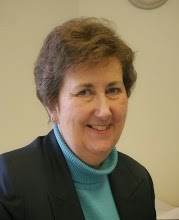
Dianne Hardisty retired as The Californian’s editorial page editor last year. She and her husband, John Hardisty, traveled with the “Cooks from the Valley” to Bahrain this month. This article written by Dianne Hardisty appeared first in The Bakersfield Californian on July 18, 2010.

TUNNY ORTALI: Shell Beach Restaurateur Takes 'Busman's Holiday' to Bahrain with 'Cooks from the Valley'

McLintocks co-founder Tunny Ortali barbecues with Cmdr. Steven Fuselier in Bahrain.

Talk about taking a “busman’s holiday.” Tunny Ortali, co-founder of the renowned McLintocks restaurant in Shell Beach, Calif., traveled this month with the “Cooks from the Valley,” a group of about 60 volunteer cooks.

Ortali and the other cooks hauled about 16,000 pounds of Harris Ranch steaks to U.S. troops in the Middle East and served a mouth-watering July 4 barbecue feast to homesick soldiers, sailors and marines to show their appreciation for the sacrifices the military is making to keep the U.S. and world safe.

Ortali’s McLintocks and its companion, Steamers of Pismo, are well known to many of the deployed service members and their families. The Central Coast steak and fish food restaurants are favorite destinations for military families stationed at Lemoore Naval Air Station, in California’s San Joaquin Valley. Lemoore is the home base of many Navy aviation squadrons assigned to carriers and flying missions over Iraq, Afghanistan and other combat zones.

Both Vice Adm. Mark Fox, the incoming leader of the Navy’s Central Command and 5th Fleet in Bahrain, and Vice Adm. William Gortney, the man Fox replaced during a change of command on July 5, were stationed at Lemoore Naval Air Station.

“I was incredibly honored to be part of the Cooks from the Valley Middle East tour,” Tunny wrote after his return. “My heart is filled with pride and patriotism when I tell everyone I know what we accomplished and what the mission entailed.”

Ortali, whose restaurants are renowned for their steak dinners, gave special attention to preparing and barbecuing the tri-tip steak for Gortney and Fox at the barbecue in Bahrain. Other locations cooks visited to serve the July 4 feast included Shaikh Isa Air Base, also in Bahrain; aboard the amphibious assault carrier USS Nassau at sea; and at Camp Lemonier in Djibouti, near the Somalia border.

Headed by attorney Tom Anton, the Bakersfield-based volunteer “cooks” have barbecued around 130,000 juicy Harris Ranch steaks since the terrorists’ attacks on Sept. 11, 2001, to show their appreciation for U.S. soldiers and sailors on ships, on domestic and overseas bases, and in hospitals. The cooks buy the steaks and pay for their expenses out of their own pockets.

Author Dianne Hardisty, a freelance writer in Bakersfield, Calif., and her husband, John Hardisty, traveled with the "Cooks from the Valley" to Bahrain.

Wednesday, July 14, 2010

Bakersfield to Bahrain: Unusual 'mission' for San Diego-based squadron VR-57

Just hours after a 7.0 magnitude earthquake devastated Haiti in January, Bill Crump and his San Diego-based fleet logistics support squadron were in the air, flying non-stop airlifts of lifesaving supplies and personnel into the region.


It wasn’t the first international emergency Crump, the squadron’s commanding officer, has responded to. But it dramatically demonstrated the readiness and capabilities of his Navy reserve squadron, which has repeatedly won military commendations.

Crump, 44, who grew up in Cleveland, Tenn., said he was “extremely proud of the men and women of VR-57, who stepped up at a moment’s notice to make [the Haiti] mission happen.”

The long list of humanitarian missions the squadron has flown also includes airlifting New Orleans refugees from the flood waters of Hurricane Katrina in 2005, and hauling rescue supplies and crews to the stricken Gulf Coast in its C-40A, which is a variation of a Boeing 737 that can be quickly reconfigured to carry cargo, passengers, or both.

While Crump describes his squadron’s primary mission as “bringing the fighter to the fight,” the crews’ readiness, the long-range reach of its aircraft and the unit’s flexibility provide frequent and unique challenges.

“You call, we’ll be there,” Crump recently told a reporter.

“There” may be airlifting warriors and weapons to hot spots in the Middle East, or “there” may be delivering the Harlem Globetrotters to a show on a military base. Legislators, diplomats and foreign officers have sat in the jump seat behind Crump in the cockpit as he has flown around the world.

But as he prepares to hand over command of VR-57 next month, Crump said one of his most unusual and gratifying missions was airlifting 15,000 pounds of fresh steak and the 58 volunteer cooks, mostly from the Bakersfield,Calif., to barbecues for troops in the Middle East on July 4.

The loosely-knit group that calls itself the “Cooks from the Valley” was airlifted with top-of-the-line Harris Ranch steaks to Bahrain, where teams of “cooks” were dispatched to four locations -- the Naval Support Activity (Bahrain), Shaikh Isa Air Base ( Bahrain), aboard the amphibious assault ship USS Nassau in the Persian Gulf and Camp Lemonier, a remote base in Djibouti, Africa, where troops stand watch over Somali pirates.

In temperatures pushed beyond the recorded 120 degrees by the humidity and heat from barbecue grills, the valley cooks served up a dinner that included a 12-ounce gourmet steak and all the traditional July 4 side dishes to homesick sailors, soldiers and marines. Volunteers paid for the steaks and their expenses out of their own pockets.

The idea behind the barbecues began two decades ago. Bakersfield attorney Tom Anton began boxing up prime grade steaks, hauling them to ships and barbecuing them for sailors as expressions of his appreciation for the military.

But after the terrorists’ attacks on the United States on Sept. 11, 2001, Anton’s barbecues grew into “Cooks from the Valley,” who travel like an invading army, barbecuing steaks by the thousands to weary troops, some deployed to the most dangerous and isolated regions of the world.

“We buy the steak, cook them and clean up,” explained Anton. “Anyone can give money. This is something we can do for the military that is allowing us to live today like it was Sept. 10, 2001. They are keeping us safe.”

Since Sept. 11, 2001, the valley cooks have barbecued more than 130,000 steaks for troops in military hospitals and on bases in combat areas, as well as stateside. On Christmas Day 2007, four cooks, including Anton, traveled to a medical outpost in Iraq to barbecue steaks.

“The need continues,” said Anton. “We are asking enormous sacrifices from these kids. We are creating ‘old young people.’ We have exposed these kids to things no one has seen, as these wars have dragged on and the U.S. has become the 911 responder for the world.”

Lt. Kendra Kaufman, a VR-57 pilot who flew legs of the valley cooks’ airlift, called the mission unique because of the “diplomatic and logistics requirements of bringing civilians into multiple combat zones, as well as the challenge of transporting perishable cargo” into an area in which the temperatures are well above 100 degrees.

Crump said he was honored to participate in the mission because he was “inspired by these ‘patriots’ not only giving of their time and money, but more importantly their genuine sincerity and appreciation of our forward deployed troops.”

The son of Olivia Crump of Cleveland and William Crump Jr. of Huntsville, Ala., the squadron’s commander is a graduate of Cleveland High School and Auburn University. He has been in the Navy for 22 years.

After several years of active duty, Crump transitioned to “reserve” status and began flying as a commercial airline pilot. He became a full-time reserve last year to serve as VR-57’s commanding officer.

Crump will remain in the reserves and resume flying for United Airlines after next month’s change of command. He and his wife, Carol, live in San Diego.

Dianne Hardisty is a freelance writer in Bakersfield, Calif. She and her husband, John Hardisty, traveled with the Cooks from the Valley to Bahrain for the July 4 barbecues. She wrote this story for The Cleveland Daily Banner in Cleveland, Tenn., the home town of the squadron's commanding officer, Bill Crump.

Captions: Top -- Cmdr. Bill Crump (left) and Lt. Kendra Kaufman are shown in the cockpit of their C-40A flying back to the U.S. from Bahrain. Center -- Cooks from the Valley, including Richard Wilson (center) barbecue steaks for the troops in Bahrain on July 4. Bottom -- Cmdr. Crump supervises the unloading of 15,000 pounds of steaks from his squadron's cargo plane in Bahrain.

Monday, July 12, 2010

TOM ANTON: A Call To Serve ... Meat

Tom Anton, left, with Vice Adm. William Gortney in Bahrain.

Tom Anton’s barbecues began simply: A guy from Bakersfield, with a genuine fondness for the military, boxed up a bunch of prime cut steaks, hauled them to a ship and barbecued them for a bunch of sailors.


Anton’s first barbecue about two decades ago was followed by several more – just one man’s personal expressions of appreciation for the military’s sacrifices.

But after the terrorists’ attacks on the United States on Sept. 11, 2001, Anton’s barbecues evolved into a loosely-knit group of about 60 people, called the Cooks from the Valley, traveling like an invading army, barbecuing steaks by the thousands to weary sailors, soldiers and marines, some deployed to the most dangerous and isolated regions of the world.

To understand how a simple barbecue could become such a big deal, you have to go back to their beginnings, which make Anton laugh when he talks about them.

Anton says the closest he came to having a military experience was spending some time in a military school as a kid. The 65-year-old attorney was born and raised in landlocked Bakersfield, Calif. But he developed a fondness for the ocean, an interest in boats and a respect for the U.S. Navy. That led to Anton’s involvement in the local Navy League chapter, as its legal advisor.

“The most complicated issue I dealt with was whether or not we could have beer at an event,” recalled Anton during a recent interview. He admitted he was a bit bored by the assignment and pestered to go out on a ship. His pestering landed him with a ride on a ship bound for Seattle.

A Navy officer he met on that ship later became the executive officer of the USS Chandler, a guided missile destroyer. He invited Anton to ride the Chandler home to California from Hawaii. An avid barbecue chef, Anton decided to arrange a taste of valley cooking for the ship’s crew.

Before he flew to Hawaii to board the Chandler, he called a prestigious restaurant on the island and ordered 400 of its best raw steaks. But he hadn’t quite figured out how to get the steaks from the restaurant to the ship at Pearl Harbor.

“I tried to rent a car, but that wasn’t big enough. I tried to get a van, and that didn’t work out either,” he recalled. The solution was to hire a limousine.

Anton crammed boxes of steaks into every inch of the limousine, as Rocky, the driver, fretted that the steaks would bleed out of the boxes and onto the plush upholstery. “I told them they wouldn’t leak. Hell, I had no idea what would happen.”

The ship’s commander, Robert Natter, cleared Anton through the base gate. When the limousine pulled up next to the ship, a senior chief came down to inspect the meat. He ripped into a box, pulled out a slab of meat, and slammed it back into the box, declaring: “It’s not good Navy steaks; it’s too thick.”

A stunned Anton held back his anger. When he looked up at the ship’s bridge, he saw his friend, the executive officer, and Natter laughing at their joke.

Anton and his steaks set sail in a calm sea and beautiful weather. The barbecue was scheduled for the third day of the journey. By then “the weather had turned snotty,” Anton recalled, describing the strong winds and high waves that rocked the ship.

He thought the crew was kidding when they told him he would have to cook the steaks on steel plates in the galley. Instead, he went onto the deck and began preparing the barbecue coals. It was only after he asked to have the ship turned away from the wind that he was ordered to the galley. Anton’s first attempt at barbecuing at sea turned out to be a disappointing steak fry.

That was in 1980. The amicable, fast-talking Anton would not be discouraged. He finagled his way into staging more barbecues – one-man events, 400 to 500 steaks, on ships and bases, every year or two.

Then the terrorists attacked New York and the Pentagon in 2001.

The Chandler’s young commander had moved up the ranks. He was now an admiral, overseeing Atlantic Fleet operations.

Anton called his old friend and asked to do a really big barbecue on board a Navy aircraft carrier.

The admiral’s initial response: “What the [expletive].”

“I told him that he had no idea about the need for private citizens to do something for the military,” Anton recalled. But the admiral was doubtful about the logistics of hauling more than 5,000 steaks out to a ship and barbecuing them.

After some convincing, Natter and other reluctant Navy brass cleared the way for Anton’s barbecue aboard the USS John C. Stennis, as it sailed from Pearl Harbor to San Diego, just eight months after 9/11.

The 12-ounce steaks served to the Stennis crew came from Fresno County’s Harris Ranch. Most of the 50-plus cooks that Anton recruited to help came from Bakersfield. This eclectic group of lawyers, judges and business people paid for the steaks themselves and sweat over barbecue coals to bring a taste of home to the kids fighting the “war on terror.”

“We buy the steak, cook them and clean up,” explained Anton. “Anyone can give money. This is something we can do for the military that is allowing us to live today like it was Sept. 10, 2001. They are keeping us safe.”

Anton recalled that a young woman on the Stennis came up to the cooks, with tears in her eyes. She asked why they had done such a generous thing.

Anton admits that his response to the woman was a bit lame. But he gets emotional when he recalls what a Bakersfield businessman told her.

Ron Surgener was serving in Vietnam, when he was suddenly given orders to return home. Still in his military uniform, he arrived at the airport in San Francisco to jeers. He was stunned and hurt by the reception.

Surgener told the young woman that he made up his mind that he would never let that happen to any other soldier. Surgener and his son, Lester, have participated in many of the Cooks from the Valley barbecues.

Since Sept. 11, 2001, the Cooks have barbecued more than 70,000 thick, juicy Harris Ranch steaks for soldiers, sailors and marines. The barbecues have been held aboard ships, in military hospitals and on bases in high profile areas, such as the Persian Gulf and Guantanamo Bay Naval Station, as well as stateside. On Christmas Day 2007, four cooks, including Anton, traveled to a medical outpost in Iraq to barbecue steaks.

This month, Anton’s Cooks from the Valley flew to the Persian Gulf with about 16,000 pounds of steaks. Volunteer cooks barbecued on July 4 for U.S. and coalition troops in four locations – at the Naval Support Activity and at Shaikh Isa Air Base, both in Bahrain; aboard the amphibious assault ship USS Nassau in the Persian Gulf, and at Camp Lemonier, a base in Djibouti, in the Horn of Africa, where troops stand watch over Somali pirates.

“The need continues,” said Anton. “We are asking enormous sacrifices from these kids. We are creating ‘old young people.’ We have exposed these kids to things no one has seen, as these wars have dragged on and the U.S. has become the 911 responder for the world.”

Anton explained the barbecues are able to come together because “I just happen to know a lot of guys who won’t hang up on me when I call them and ask for help.”

With her husband, John Hardisty, freelance writer Dianne Hardisty traveled with the Cooks from the Valley to Bahrain. She wrote about Tom Anton's barbecue quests for The Bakersfield Californian.