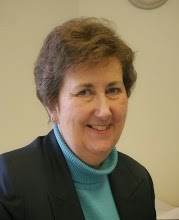
Maybe the next governor will appoint him to an administrative post. Perhaps he’ll go back to investment banking.
Given his fight against Pacific Gas & Electric Co., he’d be an interesting choice for the California Public Utilities Commission.
Speculation flew Friday about what might be next for state Sen. Dean Florez after he dropped out of the lieutenant governor’s race as San Francisco Mayor Gavin Newsom announced he was running.
The Shafter Democrat said he was backing Newsom.
Newsom won precious name recognition in 2004 when he told the San Francisco city-county clerk to issue marriage licenses to same-sex couples. He had a significant lead in polling, Florez said, and it would take a lot of money to catch up. Florez had about $1 million in the bank at the end of last year.
“I don’t mind a good fight, but I had to ask myself, ‘At what point does the fight just become a distraction as opposed to a real competition?’” Florez said. “I concluded that it would have become just a very expensive distraction from the important work of creating a better California.”
And, Florez said, he likes Newsom.
With only nine months left in his state Senate career, the termed-out Florez, 46, will be looking for work after 2010.
What are his plans?
In the short term, he said, he’ll continue his legislative fight against childhood obesity, diabetes, animal abuse and “SmartMeter failures” and will work to fix the valley water supply and state budget problems.
He said he’ll also campaign for Newsom, gubernatorial candidate Jerry Brown and attorney general hopeful Kamala Harris.
Beyond that Florez was far less certain except that he’ll be spending more time with his family and “staying in the same place for at least seven days in a row.”
“I haven’t done that in 12 years,” said Florez. “My daughter is the happiest person on earth right now.”
He ruled out a run for a different public office this year but said he could seek a higher-level elected post in the future. Florez said public service “has been in my blood,” noting he’s not only served in the state Assembly but was freshman class president at Shafter High School and UCLA student body president.
“Public service will always be an option and future elective office a possibility — as long as there is a problem to solve,” Florez said. “I believe my options are limitless.”
A consensus among Florez watchers is that he could nab a gubernatorial appointment if Brown wins. Former local Assemblywoman Nicole Parra said it’s telling that Florez announced he’ll be campaigning for Brown, Newsom and Harris.
“I see him really focusing on those big campaigns in the hopes of landing a spot within the Brown administration,” Parra said.
He could always hang onto his campaign cash for a future lieutenant governor bid, she said.
“He still has a million dollars in his account. Who’s to say he couldn’t run again in eight years with Newsom’s endorsement?” Parra said.
Florez said he plans to give his campaign money to other Democrats in upcoming elections, especially to take back the governorship and win other important races.
Parra said Florez wouldn’t win a future election in the valley because he moved so far to the left to generate statewide support. She cited Florez’s recent push for a new tax on sugar-sweetened beverages to fund anti-childhood obesity programs and on pet food to help support a registry of animal abusers.
Jimmy Yee, who owns a public affairs firm and has done some political consulting, said he hopes Florez is appointed to the Public Utilities Commission by the next governor — “whoever she may be,” he quipped. (Yee supports Republican Meg Whitman.)
Florez has demanded PG&E resolve customer complaints about their SmartMeters and check the technology itself.
“I think his advocacy on the issues of utility rates and the SmartMeters is commendable,” Yee said. “Think of what he could do at the PUC for consumers.”
Local political analyst and former Kern County Supervisor Gene Tackett said he’s heard Florez is in line for an appointment and that he is interested in a PUC post.
The governor appoints the five CPUC commissioners to staggered six-year terms. According to the commission’s website, two terms expire in January 2011.
Tackett said Florez would also make a good lobbyist. He would be in favor with pet lovers as a result of his animal protection legislation — the ban on cow tail docking and the recent proposal for an animal abuser registry, for example, he said.
“He knows how to get things done in government,” Tackett said. “He is a smart guy.”
Also going with the gubernatorial appointment or lobbying gig as possibilities was Allan Hoffenblum, co-editor of the Target Book, which analyzes state races.
“I’m sure he has mounds of contacts. And he’s not been an obscure back-bencher; he’s well-known and chaired several committees,” Hoffenblum said. “I’d be surprised if he had any difficulty finding a new position.”
Candi Easter, chair of the Kern County Democratic Party, noted Florez was an early supporter of Barack Obama’s and thought maybe a seat in that administration is in the offing.
She didn’t like hearing Florez that had dropped out of the lieutenant governor’s race.
“I think he had a good shot at it,” Easter said. “A lot of Democrats in the valley are disappointed.”
This article written by Government Editor Christine Bedell appeared first in The Bakersfield Californian on March 13, 2010. Dianne Hardisty contributed to this report.
Showing posts with label Dean Florez. Show all posts
Saturday, March 13, 2010
Tuesday, February 9, 2010
VYING FOR LATINO VOTES
The 20th Congressional District, which includes Kern, Kings and Fresno counties, was identified by last year’s “Measure of America” survey as the poorest in the nation. Represented by Democrat Congressman Jim Costa of Fresno, the district came in “dead last” for poverty, poor health and school dropouts.
Few who have worked with the poor in the southern San Joaquin Valley were surprised by the findings, which also explain why minority communities, where new immigrants often struggle just to survive, see little participation in the political process.
“It’s the hierarchy of needs,” said Kern County Supervisor Michael Rubio, whose 5th District includes some of the poorest neighborhoods of Bakersfield, Lamont and Arvin.
“The first thing many people think about is, ‘Do I have a job today? Am I making a living wage? Do I have health care?’ They don’t have time to read campaign material. The hierarchy of needs means they have to fend for themselves first,” he said.
“Many are too busy trying to survive and pay next month’s rent,” said Magda Menendez, administrator of the Mexican American Opportunity Foundation in Bakersfield.
Sen. Dean Florez, whose 16th state Senate district overlaps the 20th Congressional District, agreed. He also blamed confusing ballots, which are cluttered with complex and sometimes contradictory propositions, for discouraging widespread voter participation.
“People have to have a reason to vote, to come out and take the time to express their choices,” said Florez, who is running for California lieutenant governor. “I’ve spoken to people who simply feel that the ballot is too complicated and it feels like it’s somewhat of a test that you would get in school.”
“There are too many important issues affecting minority communities for people not to participate,” said Nicole Parra, who represented Kern County’s 30th Assembly District until she was termed out of office in 2008.
Now a Fresno-based government consultant, Parra noted that the Central Valley struggles with persistent poverty issues. The valley’s average per capita income is 32.2 percent lower than the rest of the state; college attendance is 50 percent below state average; and the unemployment rate is among the highest.
To mobilize “voters, people need to feel like they make a difference, they are part of a team,” said Parra. “Most importantly, voters want to know that the elected official cares about their needs and their concerns.”
The Asian Pacific Islander American Public Affairs Association (APAPA) has been meeting with Kern County activists in hopes of encouraging minority voters to participate in this year’s critical elections.
“It’s a matter of empowering people to get involved with their government at the national, state and local levels,” explained Danny Lee, president of APAPA’s Central Valley Chapter.
Les Fong, vice president of APAPA’s Central Valley Chapter, said his organization is planning to hold a May 2010 town hall meeting in Bakersfield to bring local and state candidates before Kern County voters. A voter education program also is being developed. Fong, a Stockton advertising executive, can be reached by e-mail at les@kenfongassociates.com.
According to estimated U.S. Census data, Latinos in 2008 comprised 47.1 percent of Kern County’s population, with non-Latino whites comprising 41.1 percent. Blacks were 6.4 percent, with the remainder of Kern County’s population of 800,458 being comprised of various other minority ethnic groups.
Yet, non-Latino white voters have the political clout in California. The Public Policy Institute of California reported last fall that while Latinos make up about 32 percent of the state’s adult population, they are only 17 percent of the registered voters most likely to turn out in elections. By contrast, whites constitute 47 percent of California’s adult population, but 68 percent of the state’s likely voters.
Many Latinos and other ethnic minorities are not citizens and therefore not eligible to vote. U.S. Census estimates for 2008 indicate about 68 percent of Kern County’s 155,938 foreign-born residents – and that population figure includes children and immigrants who are legally in this country -- are not U.S. citizens.
But even removing the citizenship factor, Latinos and most ethnic minority groups in California and Kern County have a low voter turnout rate, according to researchers and political observers.
Lee explained that many new citizens come from countries that have repressive governments. Voter participation is not understood or considered relevant. “They are not involved. They stay within their families. They keep to themselves.”
Recent gains by Latino politicians, who have been elected to local and state offices, should not be overestimated, warned Florez.
“Yes, you have Latinos who are taking on greater and more significant roles in government, but that was not always the case, even 10 years ago,” he said. “There is a nascent rise in political power among Latinos … [but the Latino community] is growing astronomically in California.
“We are entering a period where California will become the most integrated, multi-cultural population ever in the history of the world and it’s all been accomplished relatively peacefully,” he said. Minority participation in the political system is “a big deal because this integration is important to our survival as a society.”
Citing the findings of Bakersfield researcher Jesus Garcia, Menendez noted Kern County has 113,000 “high propensity voters” – people who have voted in three of the last five elections. Of these, 35,000, or about 32 percent, are Latino.
Of the 10,000 new voters in Kern County, 4,000 were Latinos – 43 percent registered Democrats, 20 percent Republican and “a whopping 30 percent were declined to state. [That sends] a big message to the Democratic and Republican parties, don’t you think,” she said.
Rubio suggests the political clout of minority communities could be awakened in 2010.
While people are focused on survival, “in times of great stress, as we currently are in, pressure builds for change,” said Rubio, who is running for the 16th state Senate seat and hopes to replace the termed-out incumbent. The 2010 elections could be about change.
This article written by Dianne Hardisty appeared first in Mas Magazine on Feb. 7, 2010.
Few who have worked with the poor in the southern San Joaquin Valley were surprised by the findings, which also explain why minority communities, where new immigrants often struggle just to survive, see little participation in the political process.
“It’s the hierarchy of needs,” said Kern County Supervisor Michael Rubio, whose 5th District includes some of the poorest neighborhoods of Bakersfield, Lamont and Arvin.
“The first thing many people think about is, ‘Do I have a job today? Am I making a living wage? Do I have health care?’ They don’t have time to read campaign material. The hierarchy of needs means they have to fend for themselves first,” he said.
“Many are too busy trying to survive and pay next month’s rent,” said Magda Menendez, administrator of the Mexican American Opportunity Foundation in Bakersfield.
Sen. Dean Florez, whose 16th state Senate district overlaps the 20th Congressional District, agreed. He also blamed confusing ballots, which are cluttered with complex and sometimes contradictory propositions, for discouraging widespread voter participation.
“People have to have a reason to vote, to come out and take the time to express their choices,” said Florez, who is running for California lieutenant governor. “I’ve spoken to people who simply feel that the ballot is too complicated and it feels like it’s somewhat of a test that you would get in school.”
“There are too many important issues affecting minority communities for people not to participate,” said Nicole Parra, who represented Kern County’s 30th Assembly District until she was termed out of office in 2008.
Now a Fresno-based government consultant, Parra noted that the Central Valley struggles with persistent poverty issues. The valley’s average per capita income is 32.2 percent lower than the rest of the state; college attendance is 50 percent below state average; and the unemployment rate is among the highest.
To mobilize “voters, people need to feel like they make a difference, they are part of a team,” said Parra. “Most importantly, voters want to know that the elected official cares about their needs and their concerns.”
The Asian Pacific Islander American Public Affairs Association (APAPA) has been meeting with Kern County activists in hopes of encouraging minority voters to participate in this year’s critical elections.
“It’s a matter of empowering people to get involved with their government at the national, state and local levels,” explained Danny Lee, president of APAPA’s Central Valley Chapter.
Les Fong, vice president of APAPA’s Central Valley Chapter, said his organization is planning to hold a May 2010 town hall meeting in Bakersfield to bring local and state candidates before Kern County voters. A voter education program also is being developed. Fong, a Stockton advertising executive, can be reached by e-mail at les@kenfongassociates.com.
According to estimated U.S. Census data, Latinos in 2008 comprised 47.1 percent of Kern County’s population, with non-Latino whites comprising 41.1 percent. Blacks were 6.4 percent, with the remainder of Kern County’s population of 800,458 being comprised of various other minority ethnic groups.
Yet, non-Latino white voters have the political clout in California. The Public Policy Institute of California reported last fall that while Latinos make up about 32 percent of the state’s adult population, they are only 17 percent of the registered voters most likely to turn out in elections. By contrast, whites constitute 47 percent of California’s adult population, but 68 percent of the state’s likely voters.
Many Latinos and other ethnic minorities are not citizens and therefore not eligible to vote. U.S. Census estimates for 2008 indicate about 68 percent of Kern County’s 155,938 foreign-born residents – and that population figure includes children and immigrants who are legally in this country -- are not U.S. citizens.
But even removing the citizenship factor, Latinos and most ethnic minority groups in California and Kern County have a low voter turnout rate, according to researchers and political observers.
Lee explained that many new citizens come from countries that have repressive governments. Voter participation is not understood or considered relevant. “They are not involved. They stay within their families. They keep to themselves.”
Recent gains by Latino politicians, who have been elected to local and state offices, should not be overestimated, warned Florez.
“Yes, you have Latinos who are taking on greater and more significant roles in government, but that was not always the case, even 10 years ago,” he said. “There is a nascent rise in political power among Latinos … [but the Latino community] is growing astronomically in California.
“We are entering a period where California will become the most integrated, multi-cultural population ever in the history of the world and it’s all been accomplished relatively peacefully,” he said. Minority participation in the political system is “a big deal because this integration is important to our survival as a society.”
Citing the findings of Bakersfield researcher Jesus Garcia, Menendez noted Kern County has 113,000 “high propensity voters” – people who have voted in three of the last five elections. Of these, 35,000, or about 32 percent, are Latino.
Of the 10,000 new voters in Kern County, 4,000 were Latinos – 43 percent registered Democrats, 20 percent Republican and “a whopping 30 percent were declined to state. [That sends] a big message to the Democratic and Republican parties, don’t you think,” she said.
Rubio suggests the political clout of minority communities could be awakened in 2010.
While people are focused on survival, “in times of great stress, as we currently are in, pressure builds for change,” said Rubio, who is running for the 16th state Senate seat and hopes to replace the termed-out incumbent. The 2010 elections could be about change.
This article written by Dianne Hardisty appeared first in Mas Magazine on Feb. 7, 2010.
Subscribe to:
Posts (Atom)