Showing posts with label Sickle Cell. Show all posts

Saturday, September 18, 2010

HINA’S DREAM: Raise public awareness of sickle cell disease

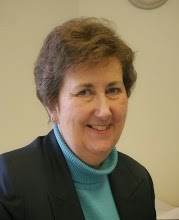
Hina Patel, right, and is shown with her mother, Bhavana, in Bakersfield Memorial Hospital shortly before her death.

Hina Patel lost her battle with sickle cell disease, but her family has not given up the fight.

Bhavana and Sanjay Patel, Hina’s parents, are forming a support group in their daughter’s honor and held a Sickle Cell Awareness Fair on Saturday, Sept. 18, in the parking lot in front of their pharmacy, Hina’s Homecare and Compounding Pharmacy.

No doubt the huge turnout for the event would have pleased the young woman, who died in May of complications from the disease.

The Patels estimate about 250 people in Kern County, Calif., have the inherited blood disorder, sickle cell disease. They hope to alert “at risk” people to the need to receive genetic counseling before they conceive a child. People whose ancestry is from Asia, Africa, South America and Mediterranean countries are “at risk” for carrying genes that allow sickle cell disease to be passed to their children.

And while couples may not realize they are “at risk,” families and health care providers also may not recognize the symptoms of the disease, resulting in treatment delays and increased pain for victims, said Bhavana Patel.

Creation of an awareness campaign and network of support was Hina’s dream. It was the project that earned Hina the Girl Scout’s coveted “Gold Award” when she was a Stockdale High School student. Her family is committed to making Hina’s dream come true.

The 20-year-old died on May 5 after developing complications from a bone marrow transplant performed in hopes of curing Hina’s disease.

Just three months earlier, Hina was the keynote speaker during Houchin Community Blood Bank’s recognition dinner in Bakersfield for blood platelet donors.

“Sometimes I ask, ‘Why me?’ But I know everyone faces bumps in the road,” Hina told donors that night. “I try to keep positive mentally and have hope. I have faith in God. ... Finding my match for platelets is difficult. Houchin has been able to do that.”

Hina received more than 80 units of platelets from Houchin donors during her years-long struggle with sickle cell disease and in the aftermath of the unsuccessful bone marrow transplant.

As her condition deteriorated and she was confined to an isolation room at Bakersfield Memorial Hospital, just weeks before her death, Hina agreed to an interview to talk about her disease, her struggle and the need for better services. Hina was later transferred to the hospital at the University of California, Los Angeles, where she died.

More than 600 people attended Hina’s services at Hillcrest Memorial Park. They included her high school, Bakersfield College and Girl Scout friends, as well as the many people she touched and inspired. Accepted into the University of Pacific’s pharmacy program, she hoped her condition would improve to allow her to attend.

Although both are pharmacists, with extensive knowledge of medicine, Sanjay and Bhavana Patel were stunned when a routine blood test revealed their baby girl, Hina, was born with sickle cell disease.

“I thought there had to be a mistake,” Bhavana recalled during an earlier interview. “We thought that was mostly an African American disease.”

But the young couple, who are both of Indian descent, learned that the hereditary disease also is found in people from many regions. Neither Sanjay, nor Bhavana knew they carried genes that could combine to inflict their baby with a potentially deadly disease.

“At first we were in denial,” Bhavana said, explaining that Hina appeared and behaved as a healthy, normal baby. But as Hina approached her first birthday, she had her first “pain crisis.” Her feet and hands swelled up. “It was very painful. All she did was cry. Then we knew it was real.”

As the years passed and Hina’s condition worsened, Sanjay and Bhavana began investigating the option of a bone marrow transplant for their daughter. Her severe and repeated pain episodes and the availability of a matching donor qualified her for the procedure, which was performed in 2008.

Despite her medical struggles, Hina did well in school. New medicines provided periods when her pain was controlled and she could join in activities with classmates. As a teenager, she excelled in her classes. But medical complications in her senior year required her to finish her studies at home.

Improving the quality of care and support for people with sickle cell disease was Hina’s reason for wanting to become a pharmacist, her mother said. Hina’s dream was to help the hundreds of people in Bakersfield who are suffering in silence.

A version of this story written by Bakersfield freelance writer Dianne Hardisty appeared in The Bakersfield Californian on Sept. 16, 2010.

Sunday, February 14, 2010

SICKLE CELL: A BATTLE FOR LIFE

Not yet 30 years old and with pharmacy degrees in hand, Sanjay and Bhavana Patel moved to Bakersfield, Calif., to start new careers and a family. A promising future loomed ahead for the attractive young couple.


That was two decades ago. Bhavana became pregnant with the couple’s first child, a daughter they named Hina. But a routine blood test – one given to all newborn babies in California – headed the family down a tortuous life-and-death path.

Ten days after Hina was born, the pediatrician called. Hina had sickle cell anemia.

“I thought there had to be a mistake,” Bhavana now recalls. “We thought that was mostly an African American disease.”

But the couple, who are both of Indian descent, learned that the hereditary disease also is found in people living in Mediterranean countries, such as Italy, as well as India. Neither Sanjay, nor Bhavana knew they carried genes that could combine to inflict their beautiful baby daughter with a potentially fatal disease.

“At first we were in denial,” Bhavana said, explaining that Hina appeared and behaved as a healthy, normal baby. But as Hina approached her first birthday, she had her first “pain crisis.” Her feet and hands swelled up. “It was very painful. All she did was cry. Then we knew it was real.”

Initially common pain relievers, such as Tylenol, gave baby Hina relief. But as pain crisis followed pain crisis, stronger drugs were administered.

“The pain became so severe,” Bhavana said, recalling staying day and night at her daughter’s side. Trips to hospital emergency rooms and to Children’s Hospital in Los Angeles began.

For the first three years, Hina’s treatment required frequent blood transfusions. But doctors at L.A. Children’s Hospital warned that these transfusions could cause a dangerous build-up of iron in the toddler’s system.

As the years passed and Hina’s condition worsened, Sanjay and Bhavana began investigating the option of a bone marrow transplant for their daughter. Her severe and repeated pain episodes and the availability of a matching donor would qualify her for the procedure.

Despite her medical struggles, Hina did well in school. New medicines provided periods when her pain was controlled and she could join in activities with classmates, including going to Camp KEEP, an outdoor environmental camp for area school children. As a teenager, she excelled in her studies at Stockdale High School. But medical complications in her senior year required her to leave the classroom and finish her studies with the help of at-home teachers. Still, she graduated with a 4.1 grade point average.

After a second consultation at Stanford Hospital, which indicated an 80 percent chance of success, a “family decision” was made in 2008 for Hina to have a bone marrow transplant at L.A. Children’s Hospital.

The procedure was successful and Hina’s sickle cell disease was believed to be cured, said Bhavana. But donor cells and Hina’s cells began fighting each other – a condition referred to as graft versus host disease.

Initially fearing the transplant had failed, Hina’s medical team, which expanded to include the staff at the Children’s Hospital in Seattle, Wash., once again began applying new therapies, which the family hopes will beat back the transplant threat. Hina and her family are now consulting with medical staff at the University of California, Los Angeles, hospital.

Sustaining her in this fight have been more than 80 units of platelets that Houchin Community Blood Bank donors in Bakersfield have provided.

“We owe her life to you,” Sanjay told platelet donors being honored at a recent Houchin dinner. “Because of you, we will see her get better.”

“Sometimes I ask, ‘Why me?’ But I know everyone faces bumps in the road,” Hina told donors. “I try to keep positive mentally and have hope. I have faith in God. … Finding my match for platelets is difficult. Houchin has been able to do that.”

Some of the donors honored at the Houchin dinner had given up to 630 units of platelets, a component critical to blood clotting. Donating platelets differs from donating whole blood in that the procedure takes longer. Based on medical considerations, fewer people are qualified to donate.

“Giving platelets to someone you don’t know is a sterling example of selflessness,” Sanjay told Houchin donors.

Just days after Hina and her family spoke to donors, Hina was admitted to Bakersfield Memorial Hospital, where once again she relied on platelets from Houchin to stay alive and fight off an infection. She has returned home to continue her recovery.

While Hina fights to keep her bone marrow transplant, she is taking online college courses through Bakersfield College. The 19-year-old honors student has been accepted into the University of Pacific’s pharmacy program. The university has promised to keep its admission offer open until Hina recovers.

She will be following in her parent’s professional footsteps, although Bhavana placed her career on hold after her daughter’s diagnosis. “If you have a child with sickle cell, you become a stay-at-home mom, you become an advocate, staying on top of her treatment,” Bhavana said, offering no regrets for her career decision.

And her advice for other parents: “Especially if you are African American, always test yourself. Otherwise, you can pass this along to your offspring.”

Following genetic testing, Sanjay and Bhavana had a second daughter, Amie, who is now 16 years old and a student at Stockdale High School. Bhavana said Amie carries her mother’s gene for the disease, but not her father’s. While Amie does not have sickle cell disease, Bhavana says her daughter will need to consider the risks when she marries and has children.

To learn more about sickle cell disease go to www.sicklecelldisease.org

This article written by Dianne Hardisty appeared first in The Bakersfield Californian on Feb. 14, 2010.